
BLOGS
Educational blogs for parents and professionals
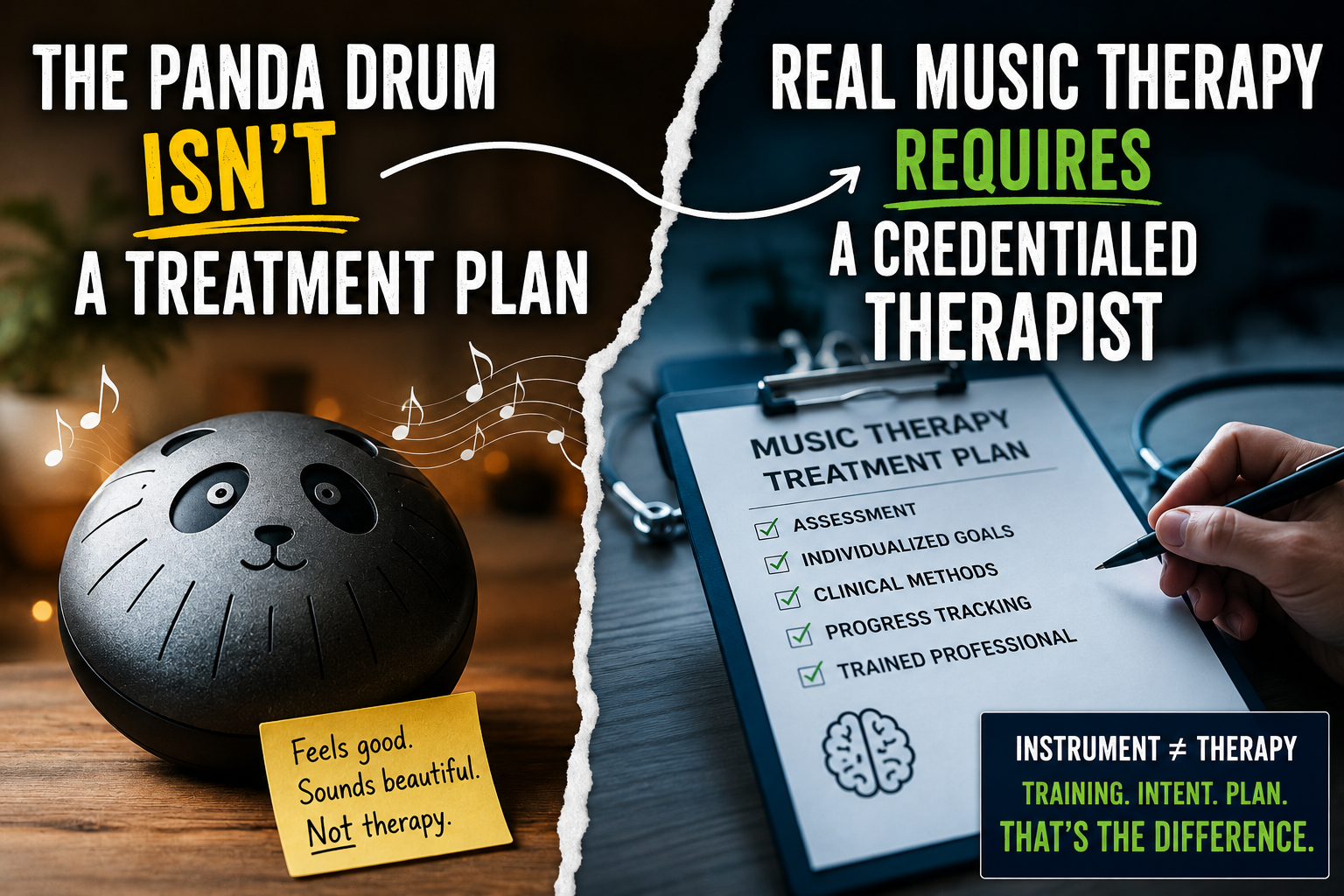
The Panda Drum Isn’t a Treatment Plan: Why Music Therapy Requires a Credentialed Therapist
Let’s be honest about this!
There’s is a viral push right now about steel tongue drums (like the Panda Drum®) that it can be beautiful and accessible instruments. Many people genuinely enjoy them for relaxation, creativity, and connection.
BUT… viral videos and ads are increasingly blurring a critical line: an instrument that feels calming is not the same thing as clinical music therapy.
As a licensed therapist with over two decades of experience specializing in marriage and family therapy, expert child therapist, as well as music therapy, I recognize and want to share the significance of this matter. My training encompasses neurological science-based research and practice in the use of music in therapy. When marketing uses therapy-like language, especially around autism, disability, anxiety, trauma, sleep, or neurological concerns, some families may delay seeking professional evaluation if the message is interpreted as a substitute for individualized assessment and treatment planning. Not all music is therapy!
This article is a research-informed, consumer-friendly explanation of what music therapy actually is, why credentials and expertise matter, and how to use instruments responsibly.
The core truth: the instrument isn’t the therapy
A drum can support:
Play
Sensory input
Co-regulation with a trusted adult
Mindfulness routines
Joy and creativity
Music therapy is different…
Music therapy is a clinical service where a trained professional uses music intentionally to address individualized goals.
In other words:
The product is an instrument.
Therapy is a process.
A treatment plan is a document with goals, methods, and measurable outcomes.
A child sitting alone and tapping a drum may have a positive experience but that is not automatically a therapeutic intervention.
Why this is going viral: “wellness language” sounds like healthcare
On the Panda Drum® collection page, the messaging repeatedly links the instrument to health and wellness outcomes. Examples include: Click here to review their page
“Escape to Calmness” and “Feel the stress melt away with every note”
“Soothing sounds help you relax naturally”
“Enhances sleep quality”
“432 Hz healing frequency for mind and body”
“Healing Resonance” language suggesting sound “mends”
The risk is when it’s interpreted as a clinical claim or when it sounds like the instrument itself functions as treatment.
If you’re a parent or paraprofessional trying to help a child who is anxious, dysregulated, or struggling socially, it’s understandable to want something simple that “works”, especially music which most children connect with.
But evidence-based care is rarely one-size-fits-all.
What research-based music therapy actually involves

1) Assessment (individualized care)
A credentialed music therapist doesn’t start with “here’s an instrument, go play.” They start with an indepth assessment.
Depending on the setting and goals, assessment may look at:
Sensory preferences and sensitivities
Attention, impulse control, and arousal level
Communication (verbal and nonverbal)
Motor planning and coordination
Emotional regulation and coping skills
Social interaction and relationship patterns
Family routines and stress points
This is where the therapy becomes individualized. Two clients can look “similar” online and need completely different approaches, even use of instruments.
2) A treatment plan with goals (not vibes)
A treatment plan typically includes:
Clear goals (what we’re targeting)
Methods/interventions (how music will be used)
Frequency/duration (how often, how long)
Progress measures (how we’ll know it’s working)
Adjustments over time (what changes when the data changes)
A product can’t do that by itself.
3) Intentional interventions (not random playing)
Research-informed music therapy uses music as a clinical intervention, applied intentionally and often in very specific ways. Examples:
Rhythm for regulation: matching a client’s arousal level, then gradually shaping tempo and intensity
Structured turn-taking: building communication and social reciprocity through predictable musical exchanges
Song-based coping tools: pairing breathing, grounding, and self-talk with musical cues
Motor and timing support: using rhythmic cueing for movement patterns, coordination, or sequencing
Trauma-informed work: using choice, predictability, and safety in musical experiences to support nervous system stabilization
The difference is not the instrument. The difference is the clinical decision-making behind how it’s used.
Neurology + music: why training matters
Music is powerful because it engages multiple brain systems at once:
Auditory processing
Attention networks
Motor planning and timing
Memory and learning
Emotion and reward pathways
Social cognition and connection
That “whole brain” engagement is one reason music can be so effective in healthcare.
But it’s also why it should be used carefully and ethically when clinical outcomes are being discussed.
A trained clinician understands:
How to slowly introduce stimulation (not overwhelm)
How to structure experiences for safety and predictability
How to select interventions based on diagnosis, goals, and response
When music is contraindicated or needs modification
This is especially important for neurodivergent clients and for people with trauma histories, seizure disorders, sensory processing differences, or complex mental health needs.
What is Neurologic Music Therapy (NMT)?
Neurologic Music Therapy (NMT) is a specialized, research-informed approach that applies standardized clinical techniques using music to address functional goals, often in neurologic rehabilitation and related settings.
NMT is not “music that feels healing.” It’s a clinical model with trained, certified providers using structured methods. All music therapists at Mewsic Moves are NMT trained specialists.
If you’re seeing claims that a specific frequency or instrument “heals the brain,” it’s fair to ask:
What is the mechanism?
What outcomes are being measured?
Who is delivering the intervention?
What training do they have?
Where is the individualized plan?
Are they equipped to respond appropriately if a client becomes overstimulated or dissociates?
The 432 Hz claim: what consumers should know
The Panda Drum® page references “432 Hz” and links it to soothing/healing language.
Here’s the practical truth:
432 Hz is a tuning reference, not a medical treatment.
People may prefer how it sounds and preference can support relaxation.
But preference is not the same thing as a validated clinical claim.
If marketing implies that a tuning standard will “heal mind and body,” that’s a red flag that the claim may go beyond what evidence can support.
“No musical experience needed” is true and also incomplete
It’s true that many steel tongue drums are designed so beginners can make pleasant sounds quickly as it is based on a musical scale that all notes played are in harmony with one another.
But two things can be true at once:
You don’t need musical training to enjoy an instrument.
You do need clinical training to provide therapy.
When the internet and marketers blend these concepts, families and clients are adversely affected as they are presented with a shortcut rather than the necessary realistic support.
What a Panda Drum can be (without calling it therapy)
Used responsibly, a tongue drum can be a great wellness tool:
A calming transition ritual (with adult support)
A shared parent-child connection activity
A “screen-free” creativity option
A mindfulness cue paired with breathing
A predictable routine tool (“three minutes of drumming, then homework”)
If you want it to be more therapeutic at home, consider asking a credentialed music therapist for guidance that fits your child’s goals and sensory profile. At Mewsic Moves we offer a FREE 15 minute consultation where you can ask us any questions about music therapy and how it can support you, your client or loved one. Book here

When to seek professional help instead of a product
Please reach out to qualified providers if you’re seeing:
Persistent anxiety, depression, trauma symptoms, or self-harm talk
Severe sleep disruption
Aggression, shutdowns, or intense dysregulation
Regression or loss of skills
Communication challenges that significantly impact daily life
Family stress that feels unmanageable
A product can support a routine. It should not be positioned as a substitute for assessment and treatment.
How to spot misinformation fast (a parent-friendly checklist)
Green flags
“May help” language (not guarantees)
Clear disclaimers (not medical advice, not a treatment)
Encouragement to seek professional support for clinical concerns
Red flags
Guaranteed outcomes (“will heal,” “will cure,” “proven to treat”)
Medical claims without credible citations
Over reliance on “frequency” as the mechanism of change
Implying a product replaces individualized assessment and treatment planning
Bottom line
The Panda Drum® is a lovely sounding easy instrument to play.
But it isn’t a treatment plan.
If you want the real, research-based benefits of music in health and development, the safest path is:
Use instruments for joyful, supportive music-making
Work with credentialed professionals for clinical goals
Expect individualized plans, measurable goals, and ethical care
Disclaimer
This article is for educational purposes only and is not medical, psychological, or legal advice. If you have concerns about health, development, or mental health, consult qualified professionals.
More Information?
We offer a FREE 15 minute consultation if you would like to know more about how music therapy can be a therapeutic program for you, your client or a loved one.

Mewsic Moves Spotlighted in Undivided Article for Transformative Music Therapy Approaches
In a recent blog by Undivided, Mewsic Moves was highlighted for its impactful use of music therapy to support neurodiverse clients and those with neurologic conditions throughout Los Angeles. The article provides an introduction to music therapy, explaining its benefits, especially for children with disabilities. It also discusses how Mewsic Moves tailors therapeutic approaches to meet the unique needs of each individual, using music as a powerful tool for communication, emotional expression, cognitive and physical development.
You can read the full article here.
Thank you Undivided for all the support you provide! Check them out here:
John Mews, LMFT, NMT

How is Music Therapy Beneficial For Those With Alzheimer’s?
Research has shown that music has a profound impact on the brain of individuals with Alzheimer’s, often eliciting positive responses and triggering various cognitive, emotional, behavioral and physiological effects. Some key ways in which music therapy can benefit those with Alzheimer’s include:
1. Memory recall

Music has the power to evoke memories and emotions, even in individuals with advanced Alzheimer's. Listening and playing familiar songs from their past can help stimulate memories and encourage reminiscence. Music has also been shown to improve memory retention and cognitive function, making it an effective tool for aiding in the learning and memorization of information which can assist in long and short term memory skills.
2. Cognitive stimulation
Engaging in musical activities such as singing, playing instruments, or rhythmic exercises can also stimulate cognitive functions, including attention, concentration, and executive function. Music can also help maintain cognitive abilities.
3. Delayed cognitive decline
While not a cure, some research has suggested that music therapy and music-based activities can potentially slow the progression of cognitive decline in Alzheimer's disease.
4. Neuroplasticity

Engaging with music can promote neuroplasticity, which is the brain's ability to reorganize itself by forming new neural connections. Learning to play a musical instrument or engaging in musical activities can stimulate the growth of new neural pathways, leading to improved brain function and cognitive abilities.
5. Emotional well-being
Music can have a calming and uplifting effect. It can also enhance mood and promote emotional well-being. Many studies have reported reductions in anxiety, depression, and agitation when individuals with Alzheimer's are engaged in music.
6. Enhanced communication
Music can serve as a means of non-verbal communication for individuals with Alzheimer's who may struggle with language. It can help caregivers and loved ones connect with and understand the person with Alzheimer's.
7. Stress reduction and relaxation

Music has the capacity to reduce stress, anxiety, agitation and restlessness by affecting the autonomic nervous system. Playing or listening to calming music can lower cortisol levels, reduce heart rate, and promote relaxation, which leads to a decrease in stress related symptoms.
8. Promotion of physical well-being
Engaging in music-related activities such as rhythmic movements or dancing can promote physical well-being by encouraging movement and coordination. This can be particularly beneficial for maintaining motor skills and physical function in individuals with Alzheimer's.
9. Social interaction
Participating in group music therapy sessions provide opportunities for social engagement, which can help reduce feelings of isolation, depression and improve overall well-being for individuals with Alzheimer’s. At our organization, we offer a range of specialized programs designed to cater to various needs, including our Rock Band, Glee choir, and Social skills group therapy services. These programs are specifically crafted to foster connections, boost well-being, and provide a sense of belonging for participants.
10. Reduced reliance on medication

Some studies have indicated that the use of music therapy in Alzheimer's care can lead to a reduction in the use of psychotropic medications, which are often prescribed to manage behavioral symptoms. Music lowers cortisol as stated above which helps reduce anxiety or stress associated with Alzheimer’s.
11. Improved quality of life
Music therapy can enhance overall quality of life for individuals with Alzheimer’s by promoting relaxation, reducing stress, bringing on a sense of joy, comfort, and connection, all of which increases overall enjoyment and pleasure in daily life. It also provides an avenue for self-expression and creativity, which can enhance feelings of fulfillment and contentment.
Bonus Benefit!
12. Caregiver support

As a marriage and family therapist, I especially love the additional benefits that music has on individual caregivers. When in session with an individual with Alzheimer’s, their partners, children, and or siblings frequently participate in the music sessions, either absorbing the melodies or actively engaging with the music. This involvement not only offers solace but also fosters a sense of empowerment, equipping them with new skills to assist their loved ones. Ultimately these sessions create enduring, delightful musical memories that they can cherish for a lifetime.
While music therapy has shown significant benefits for individuals with Alzheimer's, it is important to note that it is not a cure for the disease nor a substitute for medical treatment. It is typically used as a complementary approach to standard care, tailored to the individual’s specific needs and goals.
The impact of music therapy can differ depending on the individual, underscoring the importance of collaborating with a skilled music therapist capable of tailoring music therapy approaches to the specific needs and goals of those with Alzheimer’s. Some music therapists specialize in neurologic music therapy (NMT), making them particularly adept at working with individuals living with Alzheimer’s and other neurologic conditions. Their expertise and experience extends to understanding the intricate ways in which music influences the brain, including neuroplasticity and other neurological elements.

At Mewsic Moves we are dedicated to supporting families of those living with neurologic conditions such as Autism, Parkinson’s, Alzheimer’s and more. All therapists at Mewsic Moves are trained and understand the application of music and how it affects the brain and those living with neurologic conditions. As a family first practice we are also dedicated to supporting the entire family with counseling and group support. Check out our musical minds programs which is a community based music therapy for those living with Alzheimer’s which includes their loved ones, partners, caregivers and more.
Check it out here: www.mewsicmoves.com/musical-minds
If someone you know is struggling with the progression of Alzheimer’s and needs additional support we offer a FREE 15 minute consultation and would love to chat with you and support your loved one.
Schedule your FREE 15 minute consultation in the link below:
https://www.mewsicmoves.com/contact-us
John Mews, LMFT, NMT
Founder & Owner - Mewsic Moves
Licensed Marriage and Family Therapist #132572
Music Therapist

What is Your Brain Doing During Music Therapy?

A review of a recent case study on how the brain reacts to music therapy.
“For the first time researchers have been able to demonstrate that the brains of a patient and therapist become synchronized during a music therapy session, a breakthrough that could improve future interactions between patients and therapists.”
On July 25, 2019, a new study was published in the journal Frontiers in Psychology. It was the first research that utilized a procedure called hyperscanning in music therapy research, which allowed researchers to better understand the interaction between two people by recording brain activities in both brains at the same time.
Both EEG (electroencephalogram) and video recording were used to capture data of the session from both the therapist and the client in a guided imagery and music session. GIM music therapist guided the client through an “imaginary journey” while incorporating music listening and images to elicit memories, emotions, and feelings from the client, and to help the client understand life issues.
In this dyadic case study, the goal was to engage the client in a supportive music experience while discussing strong emotions. A series of classical music was played during the session while the client shared and discussed issues and concerns in her life. The researchers specifically looked for the “moment of interest” which was defined as a therapeutically important moment. Brain synchronization was observed through brain scan and video recordings during moments of interest. During one of the moments of interest, the brain scan showed that the client experienced a shift of emotion from negative to positive, which shortly followed by a similar shift in the therapist. The researchers concluded that the client and the therapist truly connected during the session, and such a therapeutic setting provided a safe environment to work on negative emotions, fear, anxiety, etc.
This study marks a milestone in music therapy research by demonstrating the brain synchronization between a patient and a music therapist during a music therapy session. It allowed us to see what "moment of change" looks like inside the brain. The findings could set the foundation on understanding emotional processing in therapeutic interactions, and determining the effectiveness of music therapy in psychodynamic settings.
Original Source
Jörg C. Fachner, Clemens Maidhof, Denise Grocke, Inge Nygaard Pedersen, Gro Trondalen, Gerhard Tucek, Lars O. Bonde. “Telling me not to worry…” Hyperscanning and Neural Dynamics of Emotion Processing During Guided Imagery and Music. Frontiers in Psychology, 2019; 10 DOI: 10.3389/fpsyg.2019.01561