
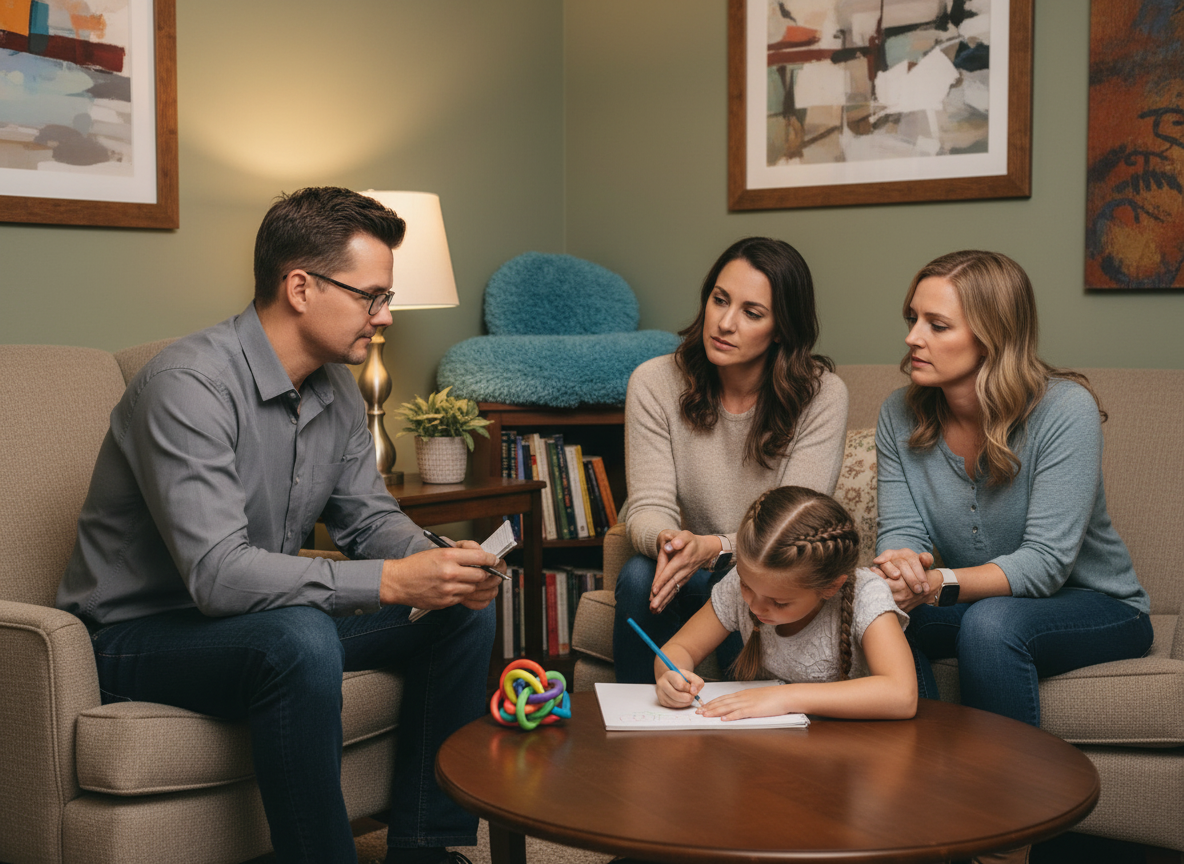
If your family uses California’s Self-Determination Program (SDP), you already know it can open doors to supports that actually fit your child and your life. What many families don’t realize is that some SDP budgets can include funding for supports like Community Integrated Coaching, which may be used for parent coaching, parent training, and whole-family support.
Important note up front: not every SDP budget includes this category automatically. If it’s not currently in your child’s budget, this blog will provide tips to walk you through how families often explore adding it so you can get the support your whole family needs.
If you’re in California’s Self-Determination Program (SDP), you may be able to include parent coaching + whole-family support in your budget (often under Community Integrated Coaching—wording can vary).
If it’s not in your plan right now, you’re not alone—and you can often explore adding it by connecting it to outcomes at home and in the community (regulation, routines, safety, communication, caregiver capacity).
Scroll down for a copy/paste script you can use with your planning team (IF/FMS/Regional Center), plus simple goal language examples.
*Share this: Send this post to your IF or another SDP parent who needs support.
What is the Self-Determination Program (SDP)?
SDP is a person-centered way for eligible Regional Center clients to receive services and supports. Instead of a “one-size-fits-all” menu, families work with a planning team to build a budget and choose services that match real needs and goals for their neurodivergent family member.
An important and big part of SDP is flexibility, supporting the individual and strengthening the environment(s) around them.
The support many families don’t ask for: coaching, counseling + training for the whole family.
In some SDP plans, families have a budget line/category that may be described as Community Integrated Coaching (or similar wording depending on the Regional Center, planning team, and vendor/FMS language).
When it’s approved, it can sometimes be used for supports like:
Parent coaching / parent training
Family support that strengthens the home environment
Skills and strategies that help the individual succeed at home and in the community
Counseling and support for siblings and/or parents to provide optimal support for their family member.
This can be especially meaningful for neurodivergent families where the day-to-day reality is complex, exhausting, and emotionally heavy.

Why parent and sibling mental health support matters in neurodivergent families
When a family member is neurodivergent, the entire family system adapts, often constantly, but not always in the best possible way. This is because they quickly act from a problem-solving and anxiety driven brain, rather than from a place of logic and what is best for the family and their family member.
Parents may be carrying:
Chronic stress and decision fatigue.
Constant “on-call” vigilance.
Sleep deprivation and burnout.
Financial pressure from services, missed work, and extra care needs.
Anxiety about school, safety, behavior, and the future.
Advocacy overload (IEPs, paperwork, emails, appointments, provider coordination).
Relationship strain and family tension.
Isolation and loneliness.
Grief, guilt, and fear of “getting it wrong,” with little support for their own mental health.
Siblings may be carrying:
Confusion, worry, or guilt.
Pressure to be “the easy one.”
Big feelings with limited space to process them.
Difficulty connecting and communicating.
Feeling overlooked or invisible at home.
Walking on eggshells around meltdowns or conflict.
Hyper-responsibility (acting like a helper or “mini-adult”).
Resentment mixed with love—and guilt for both.
Anxiety about safety and what the future will look like.
Supporting parents and siblings isn’t a luxury. It’s often a key part of helping the whole household become more stable, connected, and resilient. If you’d like, you can use the script below as a starting point, copy/paste it into an email, or adjust it to fit your family’s situation.
“Because our child’s success depends on a stable home environment, we’re requesting parent coaching/parent training and whole-family support. We’d like to explore adding Community Integrated Coaching (or a similar category) to our SDP budget to support regulation, daily routines, communication, safety, and caregiver capacity so our child can succeed at home and in the community. What documentation or goal language do you need from us to move this forward?”
“We don’t have that in our SDP budget.” How families often explore adding it
If you looked at your SDP budget and didn’t see anything like Community Integrated Coaching, you’re not alone.
Here are practical, non-overwhelming steps families often take to explore adding this kind of support:
Ask for a copy of your current SDP budget and service descriptions: If you already have it, great. If not, your Independent Facilitator (IF), FMS, or planning team can usually help you locate it.
Bring it to your planning team and ask directly: You can say something simple like: “Our family needs parent coaching/training and family support to help our child succeed at home and in the community. Is there a way to include Community Integrated Coaching (or a similar support) in our budget?”
Connect it to outcomes that matter: SDP funding decisions are typically tied to goals and outcomes. Many families find it helpful to frame support like coaching/training around needs such as:
Improving emotional regulation and coping skills (fewer meltdowns/shutdowns, faster recovery, more tools)
Increasing independence with daily routines (morning/evening routines, hygiene, homework flow, sleep routines)
Strengthening communication skills at home (expressing needs, reducing conflict, improving repair after hard moments)
Building social participation and community access (tolerating outings, participating in classes/groups, practicing community skills)
Supporting successful transitions (school transitions, schedule changes, new environments, community outings)
Reducing caregiver burnout to maintain stability at home (parent capacity as a protective factor for the participant’s success)
Improving sibling relationships and family cohesion (less resentment, better understanding, healthier family dynamics)
Increasing safety skills (elopement prevention plans, co-regulation strategies, safer responses during escalation)'
Supporting school collaboration and advocacy (parent training for consistent strategies across home/school; communication plans)
Developing behavior support strategies that are neurodiversity-affirming (skill-building vs. punishment; proactive supports)
Improving self-advocacy and self-determination (helping the participant communicate preferences, boundaries, and needs)
4.Strengthening parent consistency and follow-through (clear routines, predictable responses, aligned caregiver approach)
5.Ask what documentation or “goal language” is needed:Every team is different. Some may want a short written justification, updated goals, or clarity on frequency and purpose.
6.If you have an IF, use them—this is exactly what they’re there for: Independent Facilitators often help families translate real-life needs into plan language and budget categories.
How Mewsic Moves can support families (music therapy + LMFT family support)
At Mewsic Moves, we’re known for more than music therapy, we’re known for our family-first model. Yes, music therapy can be powerful for regulation, communication, confidence, and connection. But we don’t measure success only by what happens in session. We focus on goals that carry into real life, especially at home, so progress supports the whole family system: daily routines, sibling relationships, parent-child connection, and the way everyone communicates and feels together. And when those changes show up at home, they often ripple out into school and other environments, too.

But we also want families to know this:
John Mews,founder of Mewsic Moves, is a Licensed Marriage & Family Therapist (LMFT) and music therapy with advance training in music and neurology with over 20 years of experience supporting children, parents, couples, and whole family systems.
John brings a specialized unique blend of family experience, clinical training, deep experience in the neurodivergent community, and a genuinely steady, compassionate presence so families feel understood, not judged, and never alone in the process.
We can support families not only through music therapy, but also through parent coaching, family therapy, couples support, and sibling support because “what happens in a child’s world doesn’t stay in a session.” It shows up at home, in routines, in communication, and in relationships.
For some families, music therapy is the right fit.
For other families, the missing piece is support for the parents and siblings help navigating stress, relationship strain, parenting challenges, and the emotional impact that can come with neurodivergence.
Often, it’s not either/or. It’s both.
If you’re curious about whether your SDP plan could include parent coaching, training, or counseling/coaching support for your household, we recommend you first reach out to your support person, such as your independent facilitator.
We can also offer a complimentary 15-minute consultation. During this session, you can discuss your concerns and ask any questions you may have about incorporating this additional support into your SDP budget.
We’ll help you:
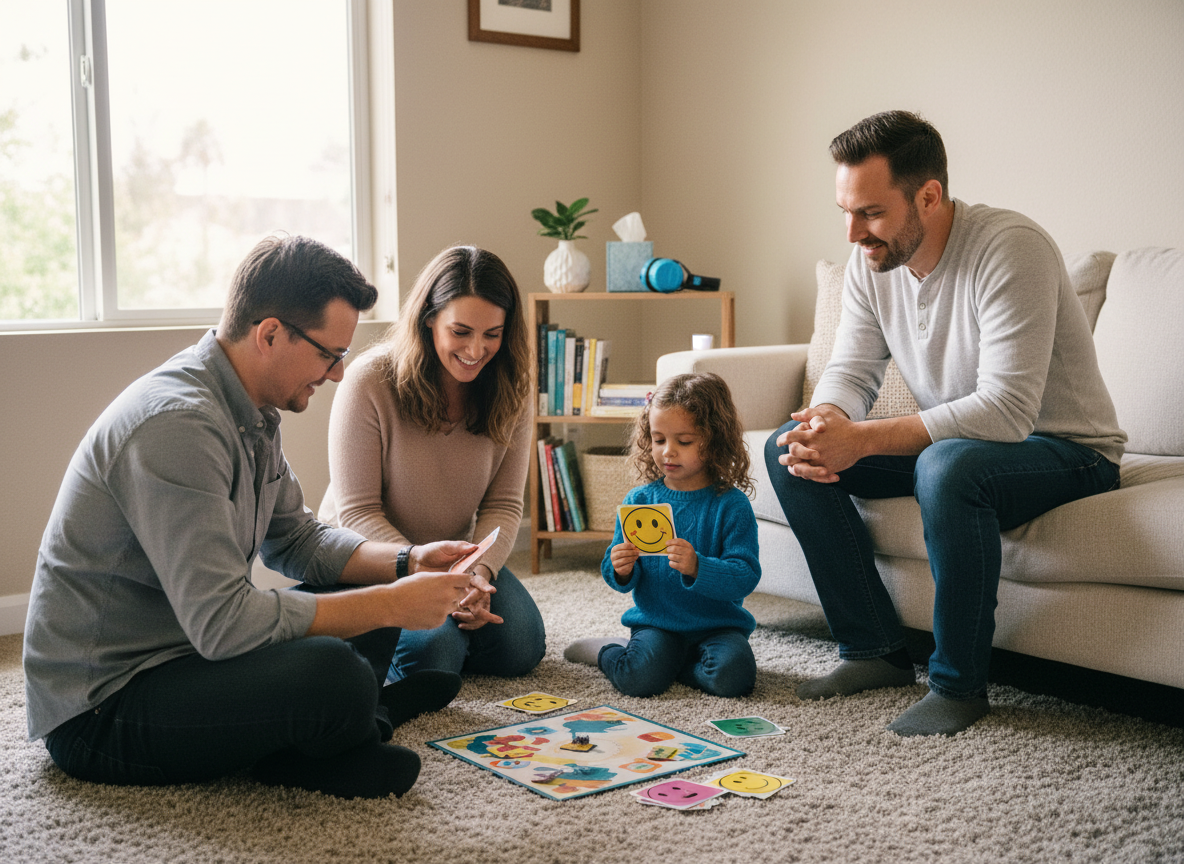
Talk through what your family is navigating
Identify what kind of support would be most helpful (parent, couples, sibling, family)
Think through how to ask your planning team about adding this support to your SDP budget
and more…
Book your complimentary 15-minute consultation here to discover how we can assist you and your family.
https://www.mewsicmoves.com/contact-us
We’re honored that we can support your entire family.
Let’s Be Social :