
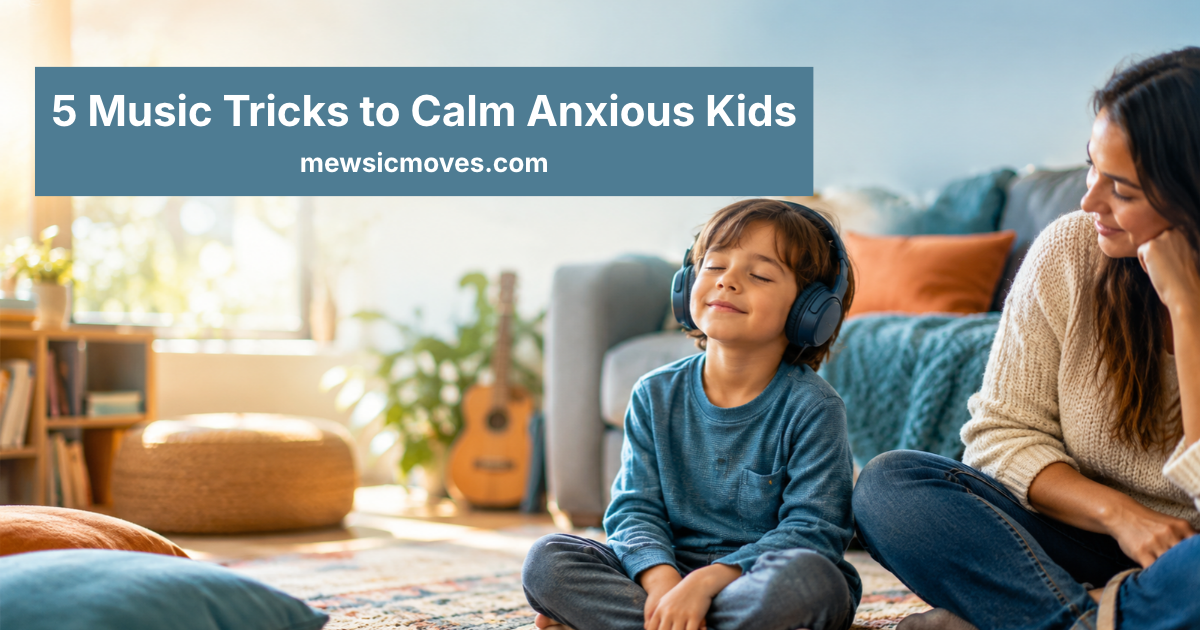
By John Mews, LMFT, MT, Founder and Clinical Director
The meltdown at bedtime. The stomach ache before school. The tears that come out of nowhere. If your child struggles with anxiety, negative thoughts and big feelings, you are not alone. About 1 in 14 U.S. children ages 3 to 17 struggles with anxiety, according to CDC-supported national survey data.
Here is the good news: one of the most powerful calming tools is already in your home. Music for kids with anxiety is not just a nice extra. It works directly on the body and brain. Research reviews of hospitalized children found that music interventions significantly lowered anxiety, fear and pain.
Our team of Neurologic Music Therapists uses music every day to help children feel safe, calm and in control. Below are 5 simple tips you can use at home, starting tonight.
Why music works on big feelings
When a child is anxious, their body goes into alarm mode. Heart rate speeds up. Breathing gets short. The thinking brain goes offline.
Music reaches the body faster than words. A steady beat gives the nervous system something to sync with. Our bodies naturally match a rhythm we hear, and therapists call this entrainment. Slow music can help slow a racing heart and breath. That is why "just calm down" rarely works, but a slow song often does.
Tip 1: Match the mood first, then move it
Don't jump straight to soft lullabies when your child is upset. A calm song can feel like it's ignoring how they feel.
Try this:
Start with music that matches their energy. A little louder, a little faster.
Every song or two, switch to something a bit slower and softer.
Over 10 to 15 minutes, you gently walk their body down to calm.
Music therapists call this the iso principle. Meet them where they are, then lead them somewhere better.
Tip 2: Slow beats, slow breaths
Breathing is the fastest way to calm the body. Music makes it easier for kids to do.
Try this:
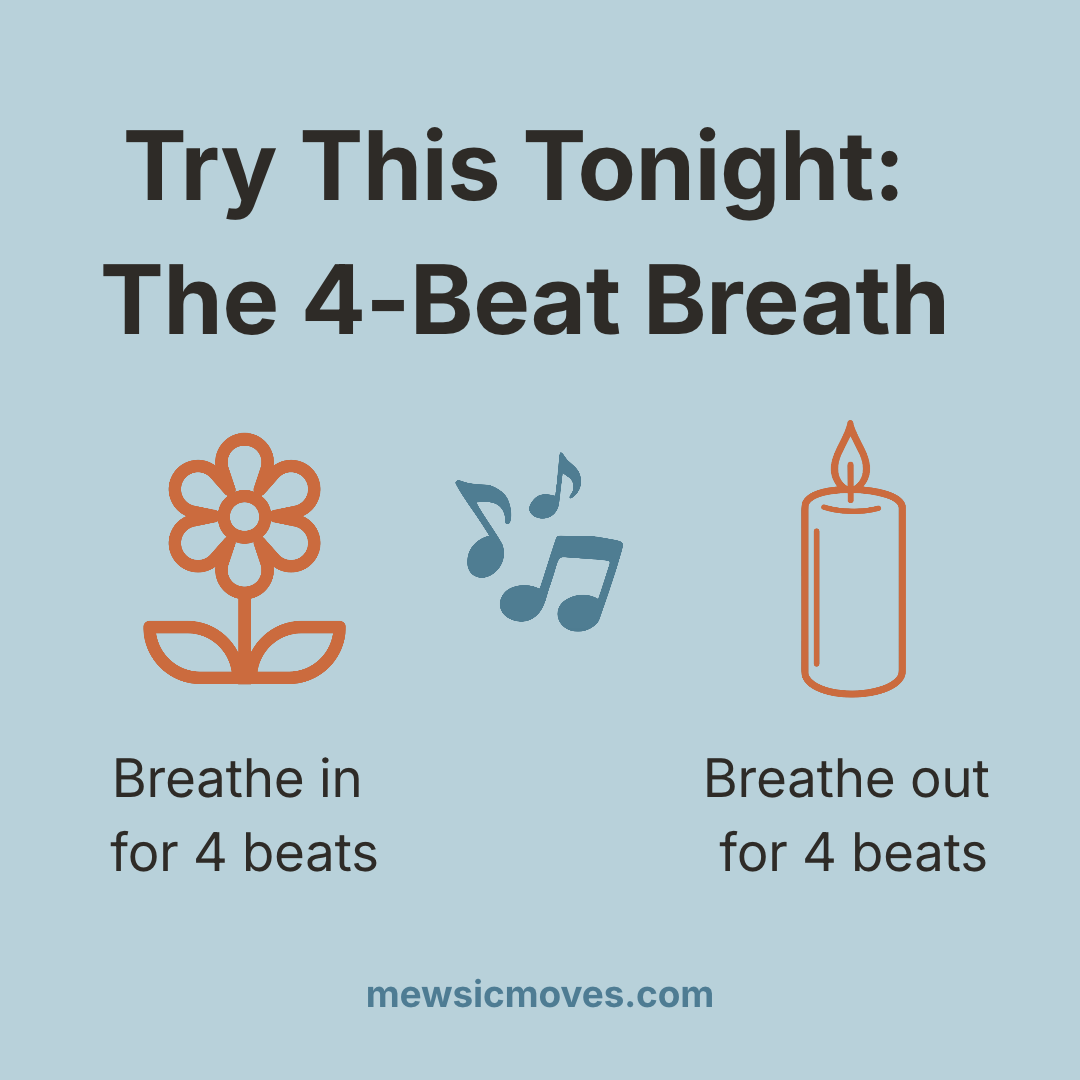
Pick a slow, steady song (around 60 to 80 beats per minute, like a resting heartbeat).
Breathe in for 4 beats. Breathe out for 4 beats.
Make the out-breath longer by humming. Humming naturally slows the exhale.
Make it playful: "Let's smell the flower for 4 beats, blow out the candle for 4 beats."
Tip 3: Build a Calm-Down Playlist together
Children calm faster with music they choose. When they help build the playlist, it becomes their tool, not yours.
Try this:
Sit together on a calm day (never during a meltdown).
Pick 3 to 5 songs that make them feel safe, happy or sleepy.
Name the playlist together: "My Calm Songs" or "Brave Beats."
Save it on a device they can reach. Headphones help block out a noisy world.
Tip 4: Drum it out, then sing it down
Some feelings are too big to talk about. Music gives them somewhere to go.
Try this:
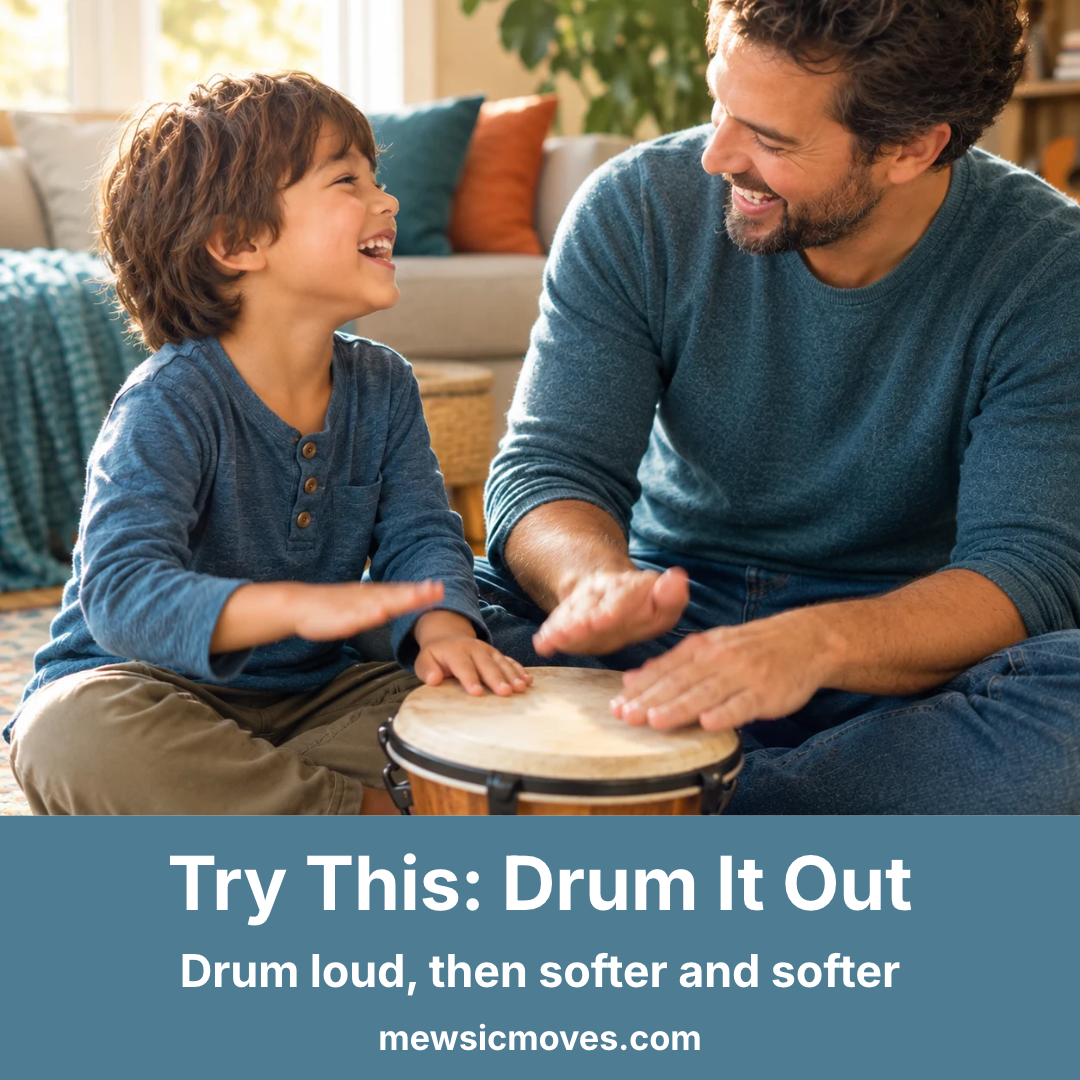
Grab a drum, a pot and a spoon, or just a pillow.
Say: "Show me how big your mad feels on the drum."
Drum loud together. Then play softer, slower, softer, until you're both barely tapping.
Name the feeling in a simple song: "I feel mad, mad, mad... and I'm getting calm."
Naming a feeling helps the brain settle it. Singing it makes that easier for children who don't have the words yet.
Tip 5: Use the same songs every day
Anxious children love knowing what comes next. Predictable songs create predictable calm.
Try this:
Choose one song for each tricky moment: waking up, the car ride to school, bath time, bedtime.
Play or sing the same song every time.
Soon, the song itself signals: you are safe, this is what happens next.
This is especially helpful for kids with ADHD, autism or sensory differences, who often struggle with transitions.
When to get extra support
These tips help most families. But reach out to a professional if your child's anxiety:
Lasts for weeks, or keeps getting worse
Stops them from going to school, sleeping or playing
Shows up as frequent stomachaches or headaches with no medical cause
Leaves you feeling stuck or exhausted
Asking for help is a strong, loving step. It is never a failure.
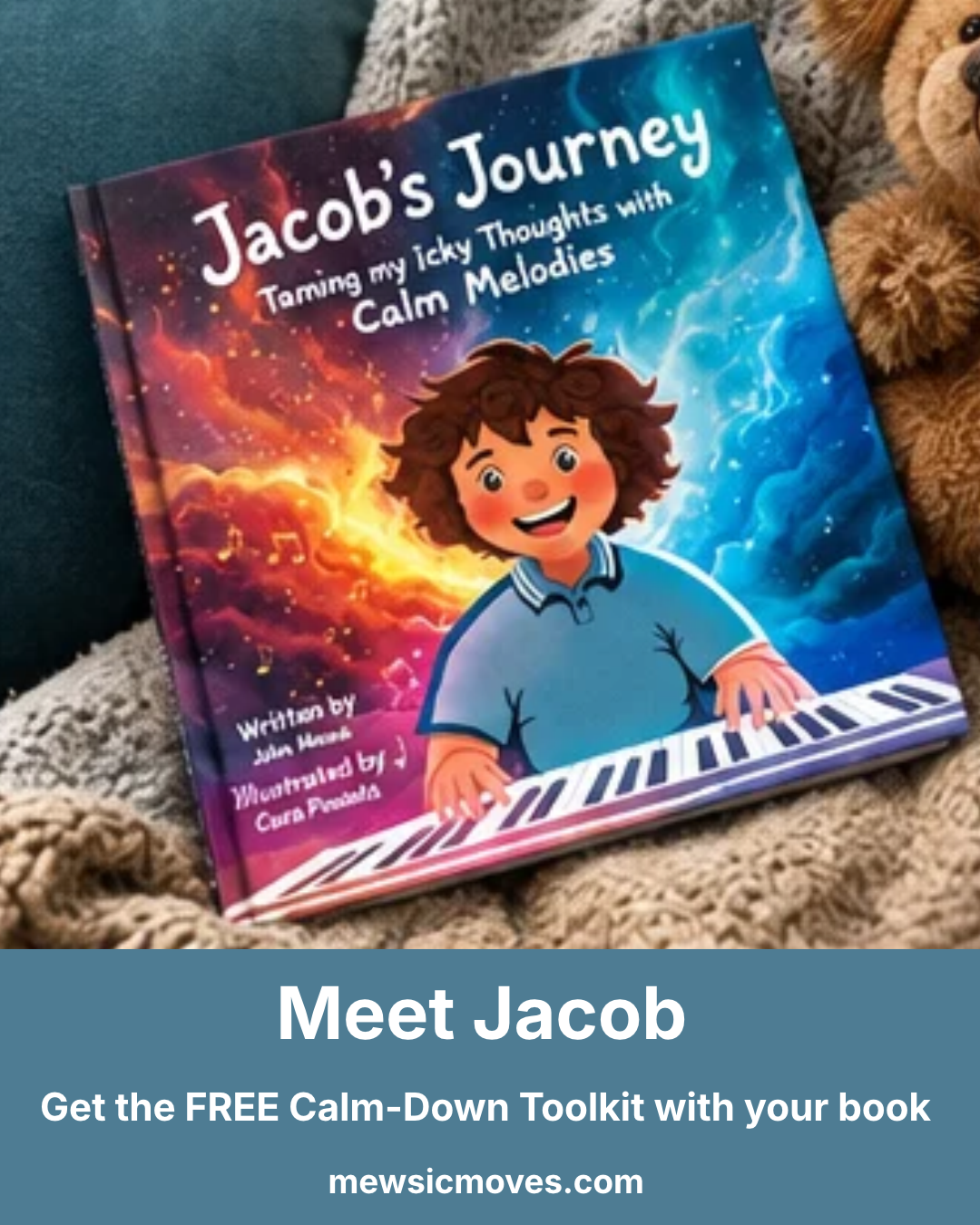
Meet Jacob: a story that teaches kids to calm their "icky thoughts"
We wrote these tips into a story your child will ask to read again and again.
Jacob's Journey: Taming My Icky Thoughts With Calm Melodies follows a boy who learns to use music to calm worries and big feelings. Written by John Mews, LMFT, MT, with 22 years of experience helping families.
Inside the book:
A warm, relatable story kids see themselves in
Real music therapy calming tools woven into the story
A QR code to free downloadable resources for parents, teachers and therapists
Perfect for: parents, teachers, school counselors, therapists, and gift-giving.
Already read it? Please leave a quick Amazon review. It helps other families find this mental health resource.
Want personal support for your child?
Mewsic Moves is a family-first music therapy and family therapy practice. Our Neurologic Music Therapists support kids and families in Santa Monica, Torrance, Long Beach and Pasadena, plus virtual sessions. Southern Orange County is coming soon.
Or call us at 1-833-MEWSIC-1
Visit mewsicmoves.com
Get our FREE Calm-Down Music Toolkit: breathing games, a feelings chart and calming songs.
Enter your email to download it now.
Know a parent who needs this today?
Share this post with one friend, teacher or grandparent. One song might be the thing that turns their hardest night around.
FAQ
What kind of music calms anxious kids? Slow, steady music around 60 to 80 beats per minute, with few lyrics or soft vocals. Most important: music your child likes.
How long does music take to calm a child? Often 5 to 15 minutes. Start by matching their energy, then slow down gradually.
Is music therapy different from just listening to music? Yes. Board-certified music therapists use music in planned, evidence-based ways to reach clinical goals like emotional regulation.
What age is Jacob's Journey for? It's written for young children and is used by parents, teachers and therapists.
This post is for education only and is not a substitute for professional care.